
It's Not "Just Bad Posture": The Hidden Connection Between Posture, Jaw Tension, Breathing, and Oral Function


Most people think posture is just about standing up straight. But posture affects much more than your appearance.
Your posture can influence your jaw, breathing, tongue position, chewing, clenching, sleep quality, and muscle tension.
The jaw does not work by itself. It is connected to the head, neck, airway, tongue, and breathing system.
Temporomandibular disorders (TMD) are complex and often involve multiple contributing factors. Research suggests a possible relationship between forward head posture and TMD symptoms, although posture is typically not the only cause. Becoming aware of your head and neck position and taking steps to improve posture may help reduce one potential source of jaw strain.
What Is Forward Head Posture?
Forward head posture happens when the head shifts in front of the shoulders instead of stacking comfortably over the spine.

This may develop from:
Looking down at phones
Working at a computer
Driving
Stress and muscle tension
Mouth breathing
Poor breathing mechanics
Jaw clenching
Sleep-disordered breathing
When the head moves forward, the neck and jaw muscles often work harder to support it. Over time, this can contribute to neck tension, headaches, jaw discomfort, clenching, and changes in breathing patterns.
How Posture Can Affect the Jaw

The jaw is highly influenced by head and neck position.
When the head shifts forward, the jaw may change position too.
Some people notice more jaw tension, clicking, popping, chewing fatigue, or clenching.
Others may feel tightness in the face, temples, neck, or shoulders.
Habits That Can Make Jaw and Posture
Problems Worse
Many everyday habits reinforce poor alignment and muscle tension without us
realizing it.
Common patterns include:
Looking down at a phone for long periods
Resting the chin on the hand
Clenching while concentrating
Chewing mostly on one side
Sleeping with the jaw pushed into the pillow
Holding the mouth open at rest
Mouth breathing during the day or night
Sitting with rounded shoulders
Carrying stress in the jaw, neck, and shoulders
These small habits may not seem like a big deal at first, but repeated all day, every day, they can become the body’s “normal.”
Mouth Breathing and Posture

Mouth breathing and posture are closely connected.
In children, research has found that mouth breathing is associated with postural changes, including forward head posture, although further research is needed.
One review noted that forward head posture may be a strategy to increase airflow in children who mouth breathe.
This matters because mouth breathing often goes hand in hand with low tongue posture.
When the tongue rests low in the mouth instead of gently against the palate, the jaw, lips, neck, and airway may all compensate.
Chewing, Clenching, and Jaw Stability

Chewing is more than just breaking down food. Efficient chewing requires coordination between the tongue, jaw, lips, cheeks, breathing, and posture.
When the tongue doesn't help stabilize and move food well, the jaw may overwork.
When breathing is inefficient, the body may tense the jaw and neck. When posture collapses or shifts forward, the muscles around the jaw may stay “on” more than they should.
People often blame clenching and grinding only on stress. Stress can absolutely contribute, but it is not always the whole story. In some people, clenching may also be related to airway stress, jaw instability, low tongue posture, poor sleep, or compensation patterns.
Where Myofunctional Therapy Fits In
Myofunctional therapy addresses oral and facial muscle patterns that may contribute to the problem.
Therapy may focus on:
Tongue resting posture
Lip seal
Nasal breathing
Jaw-tongue separation
Chewing patterns
Swallowing patterns
Breathing awareness
Reduction of compensatory oral habits
Carryover into daily routines
The goal is not just to “strengthen the tongue.” The goal is to help the body develop better resting postures and efficient movement patterns.
Why Tongue Posture Matters
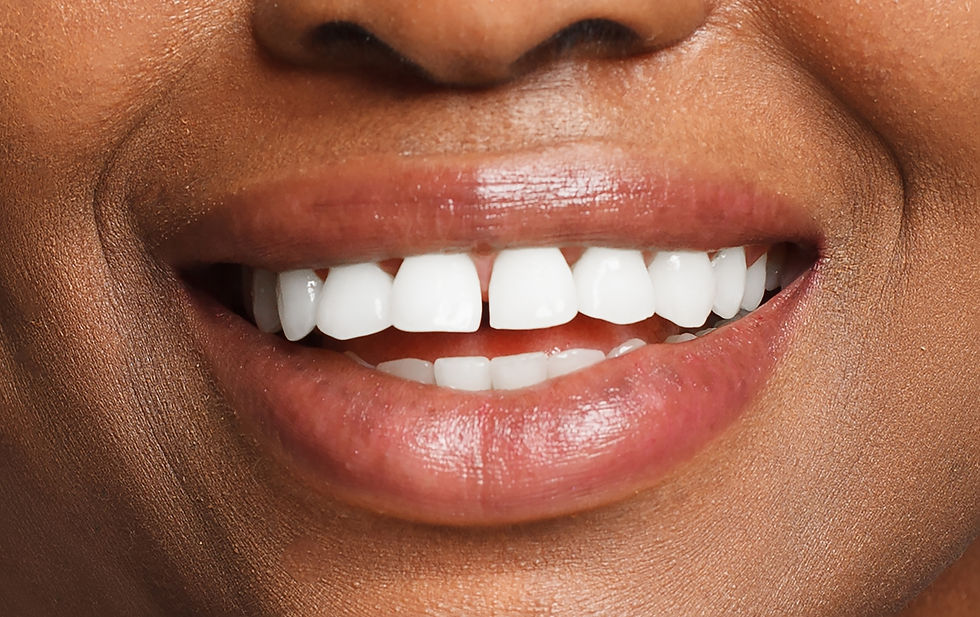
Many people don't realize the tongue has an ideal resting position. At rest, it should rest gently against the palate, with the lips closed, teeth slightly apart, and breathing through the nose.
In growing children, the tongue’s gentle, consistent pressure against the palate helps support normal development of a broader dental arch. It also helps balance the inward pressure of the cheeks and lips so the teeth have room to develop in a more stable position. Keeping the tongue elevated rather than low or pulled back may also support space in the upper airway and encourage nasal breathing.
When the tongue rests low or pushes against the teeth, it may contribute to a narrow palate, dental changes, mouth breathing, tongue thrust, and jaw or neck compensation. In adults, improving tongue resting posture can support nasal breathing and help maintain space in the upper airway by keeping the tongue forward and elevated rather than low or falling backward into the airway, especially at night.
What Can Be Done?
Improvement usually starts with awareness.
You can begin by noticing:
Is your tongue resting low or on the roof of your mouth?
Are your lips closed at rest?
Are your teeth touching when you are not eating?
Do your shoulders lift when you breathe?
Do you chew mostly on one side?
Are you clenching while working, driving, or concentrating?
Is your head drifting forward toward your screen?
From there, therapy may include posture education, breathing retraining, myofunctional exercises, chewing awareness, nasal breathing support, and collaboration with dental, orthodontic, airway, or physical therapy providers when needed.
The Takeaway
Posture, breathing, tongue position, jaw tension, chewing, and clenching are
often connected.
That does not mean posture is the only cause of jaw pain. It means the body works
as a system.
When one part of the system compensates, other parts often follow.
Myofunctional therapy can help patients connect the dots and retrain the patterns that may be contributing to tension, inefficient breathing, poor oral rest posture, and
jaw strain.
You are not “just slouching.”You are not “just clenching.”You are not “just mouth breathing.”
Your body may be adapting the best way it knows how. Therapy helps teach it a better way forward.
References
Lee, W. Y., Okeson, J. P., & Lindroth, J. (1995). The relationship between forward head posture and temporomandibular disorders. Journal of Orofacial Pain.
Minervini, G., et al. (2023). Correlation between Temporomandibular Disorders and Posture: A Systematic Review and Meta-Analysis. Healthcare.
Olivo, S. A., et al. (2006). The association between head and cervical posture and temporomandibular disorders: A systematic review. Journal of Orofacial Pain.
Rocha, C. P., et al. (2013). Is there a relationship between temporomandibular disorders and head and cervical posture? A systematic review. Journal of Oral Rehabilitation.
Neiva, P. D., et al. (2018). Postural disorders in mouth breathing children: A systematic review. Brazilian Journal of Physical Therapy.
Camacho, M., et al. (2015). Myofunctional Therapy to Treat Obstructive Sleep Apnea: A Systematic Review and Meta-analysis. Sleep.


Comments